
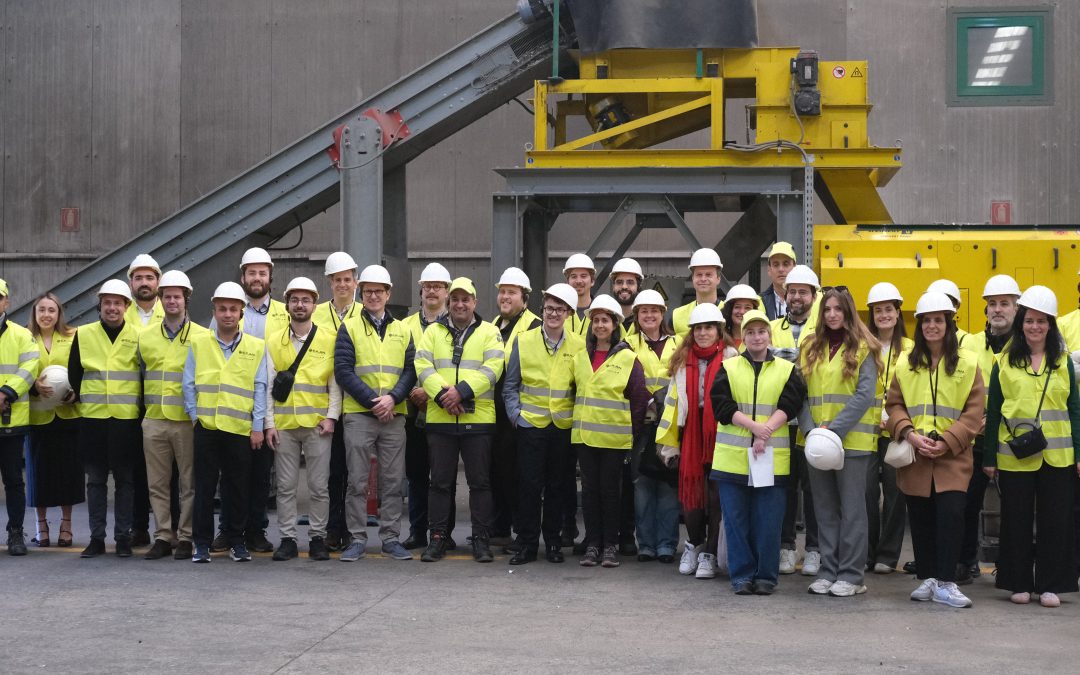
On December 9 and 10, 2025, right after the recent pilot scenarios definition, projects partners met in Athens, Greece to discuss progress and requirements to achieve the maximum impact of our project.
Europe’s supply of Critical Raw Materials is increasingly vulnerable, highlighting the urgent need for more resilient and circular solutions. iBot4CRMs responds to this challenge by advancing innovative, technology-driven approaches to recover CRMs from a wide range of waste streams. Built on strong collaboration between technology providers and pilot operators, the project places human-centric automation and innovation at its core, enhancing both efficiency and safety. Having established a solid foundation, iBot4CRMs is now moving from scenario definition to testing, validation, and scale-up, paving the way for real impact on Europe’s CRM resilience.
Critical Raw Materials (CRMs) are vital for sustainable technologies, yet Europe remains heavily dependent on a limited number of distant suppliers. This reliance makes the supply chain extremely vulnerable to disruptions, most recently highlighted by China’s restrictions on CRM exports (read more about it in our recent blogpost).
These challenges were central to the discussions at the third iBot4CRMs consortium meeting in Athens, alongside a review of the seven pilot scenarios specifically designed to improve CRM recovery through innovative and circular approaches.
In the last months, project partners, led by the Instituto Tecnológico de Aragón, released the first definitions and baseline characterisations of the iBot4CRMs pilot scenarios, each focusing on a different waste stream where CRMs can be recovered. Collaboration between technology providers and pilot owners has helped create a clear structure for each scenario, including storytelling, process mapping, technology alignment, and requirement gathering. This groundwork will support upcoming simulations, technology development, and validation.
The seven scenarios cover a broad range of CRM recovery opportunities, including the dismantling end-of-life electric vehicle motors (Scenario 1), improving recycling processes for flat-screen TVs and desktop computers (Scenarios 2–3), and integrating new technologies into the treatment of small household appliances (Scenario 4) and end-of-life vehicles (Scenario 5). They also address CRM recovery from municipal solid waste containing mis disposed electronics (Scenario 6) and from incinerated urban waste, where materials are more difficult to extract due to ash residues (Scenario 7).
Find out more about each pilot scenarios through the words of Pilot Coordinator Cecilia Fatás (ITA), and each Pilot Scenario Leaders
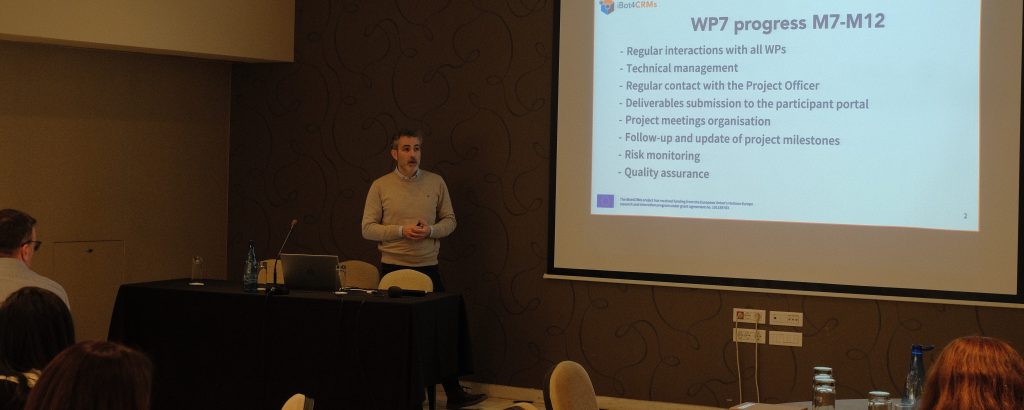
Following the definition of the pilot scenarios, project partners gathered in Athens on December 9 and 10, 2025 to review progress and align on the steps needed to maximise the project’s impact. On the first day of the consortium meeting, project partner Cecilia Fatás started by introducing all the progress achieved over the past six months and the path forward. As she noted during her presentation, “the team now clearly understands the starting point and the goals ahead. The next steps involve refining requirements, defining technical specifications, and partner collaboration, logistics and advancing key developments.”
Following her intervention, insights sharing and exchange of points of view for alignment and collective achievement of the project’s goals were at the center of the conversation.
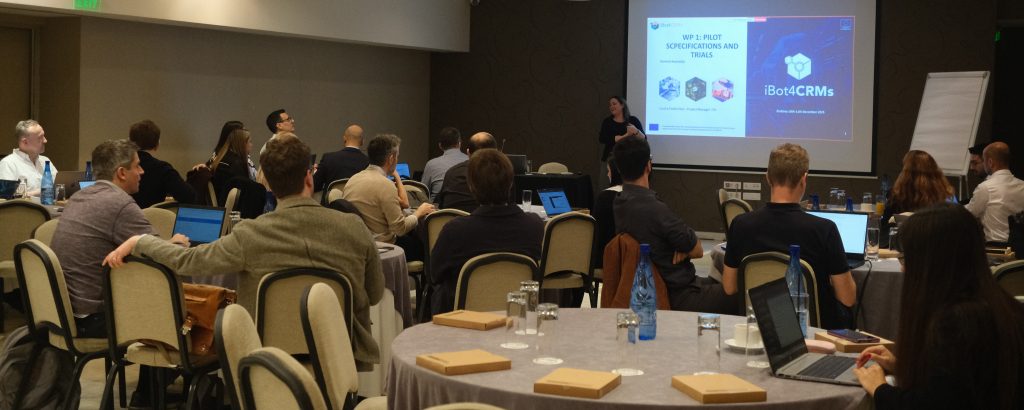
That same morning, each pilot presentation that followed focused on many pilot aspect, especially the challenges ahead, including the following:
- E.K.AN. is implementing Scenarios 2 in their facility, and the dismantling of Flat Panel Display. One of the biggest challenges that they will try to address will be human/robot collaboration, not only to find the right balance between human activities and robots’, but also in bringing these tools as an asset to human welfare and productivity. As Thanasis Pitsas (E.K.AN.) explained, “Technologies, like Digital Twin & Simulation, Advanced Sensing, Database & Models, Lifelong Learning, Robotics & Machine Learning could help increase productivity by up to 40%, and improve the recovery of raw materials like aluminum, copper, PCBs. They could also allow for risk reduction for the operators, since robots could take over the handling of hazardous components (e.g., mercury lamps), enhancing the safety and ergonomics for operators.”
- For VOLT, one of the main challenges will revolve around the performance of recycled magnets, which should be with at least equal capacities in electrical motors as primary ones.
- As we progress, many questions remain open, including for Valorsul, leading Scenarios 6 and 7, who has yet to identify the CRMs that can be recovered from the slag obtained after waste incineration.
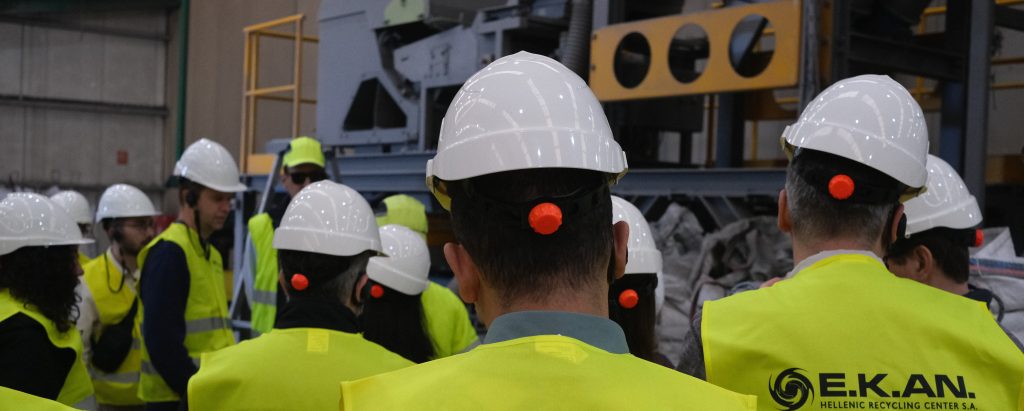
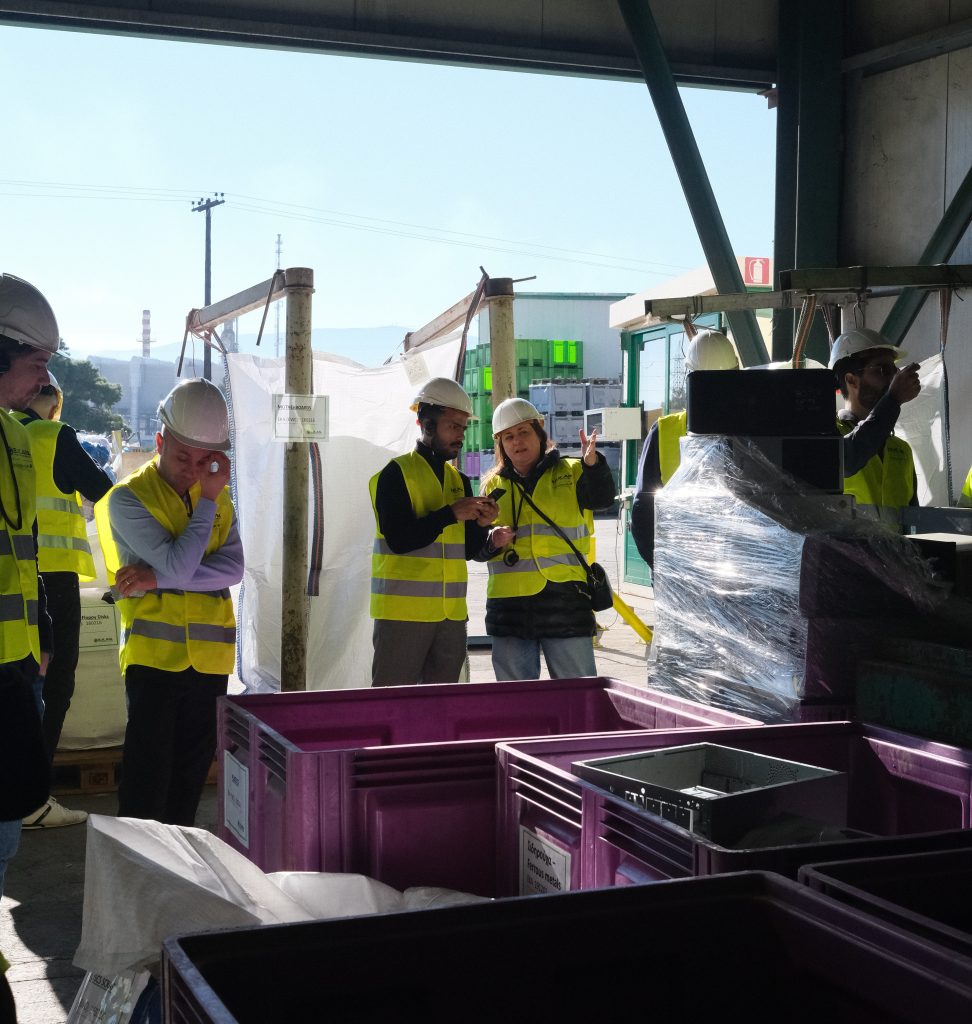
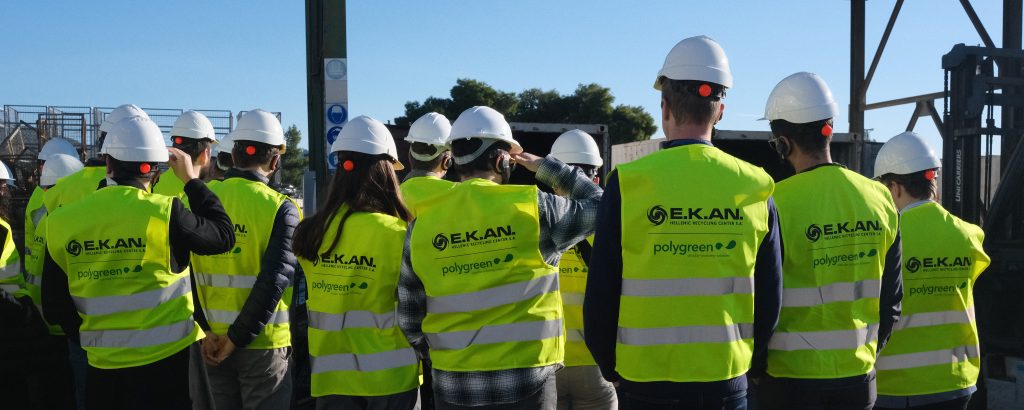
On the second day of the consortium meeting, project partners had the pleasure of discovering the impressive work being done at the E.K.AN. facilities, and witness firsthand the processes of Scenarios 2, 3 and 4 in action. Following the visit, Antonio M. Ortiz, Technical Project Coordinator, said “The visit to the EKAN facilities has clarified diverse technology deployment and integration aspects while boosted the motivation of the consortium for developing innovative solutions to recover critical raw materials from electronic waste. It was really interesting to see the different processes to go from whole appliances to raw materials.”
Building on the defined scenarios and their respective datasets, the coming months will focus on testing and validating all seven scenarios. This work will be led by project partners INESC TEC and THEKER Robotics, who will train the models and test the project solution. In parallel, the consortium will deepen waste-flow data collection, refine requirements, and test sensing technologies across all pilots. These activities will feed into the development and validation of simulation and digital-twin tools, supporting better prediction and optimisation of process performance. Ongoing monitoring of requirements and planned tasks, to be completed by January, will help ensure a clear understanding of the project’s real impact.
Eventually, the scenario framework will be revisited and consolidated to freeze the technical scope, paving the way for large-scale validation and deployment of the iBot4CRMs integrated solution.
Find out more about our project by watching our recently released introduction video