
Stakeholders have two more days (29 July) to provide feedback on the upcoming EU Critical Raw Materials centre. The feedback is part of the European Commission’s consultation process to develop this initiative further to secure critical raw materials for the European industry and strengthen the resilience of the supply chains.
You can share your views here.
The Context
For context, the European Commission opened its call for evidence and public consultations on 19 May 2026 to seek stakeholders feedback on four key levers to help secure access to Critical Raw Materials (CRMs): joint purchasing, stockpiling, investments, and raw materials intelligence. After feedback is received, the Commission will summarise the input in a synopsis report, explaining how they have taken feedback into account.
The proposed legislative changes are expected to be adopted by the European Commission the second quarter of 2026.
The CRM centre is a follow-up from the RESourceEU Action Plan which seeks to accelerate and amplify EU’s efforts to secure the EU’s supply of critical raw materials like rare earth elements, cobalt or lithium. Both RESourceEU Action Plan and the Critical Raw Materials Centre are part of the larger European Critical Raw Materials Act (CRMA).
Why are Critical Raw Materials important for the EU?
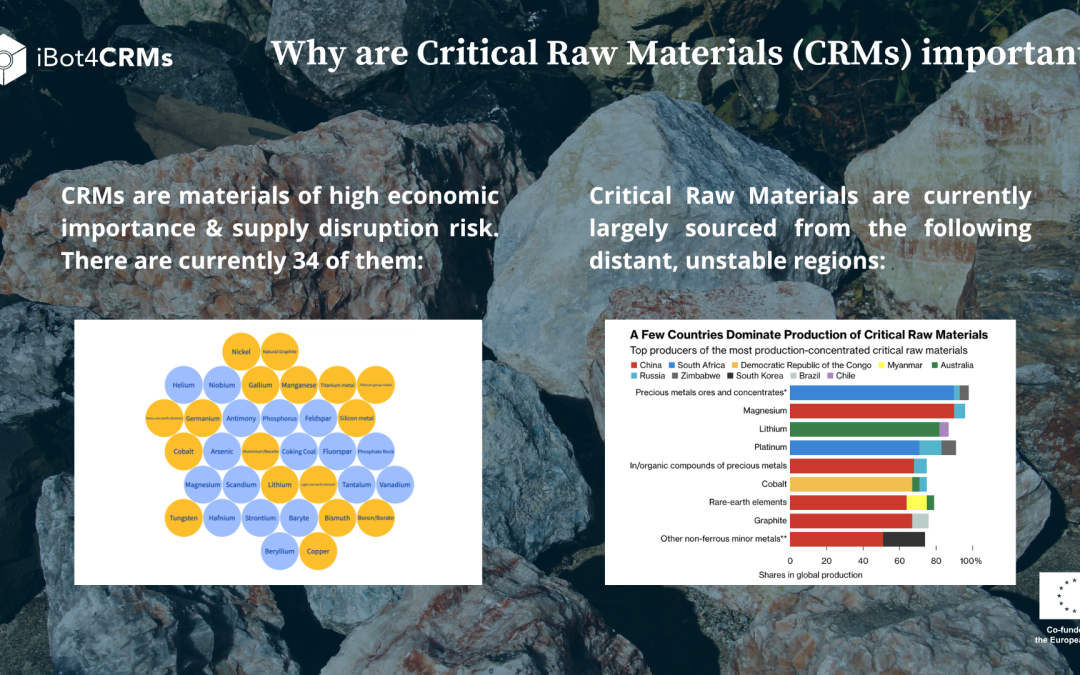
Critical raw materials (CRMs) are key to economy, security, environment and society but securing a sustainable supply is increasingly challenging in a rapidly shifting geopolitical context. This is primarily due to the strong dependencies on third countries in access to such materials like rare earth elements. Securing access to CRMs is now a security imperative for the EU, not just an economic one. This was also echoed by the European Commission at the European Circular Economy Stakeholder Platform (ECESP) conference that took place in Brussels earlier this year, and we reported on this as well.
While CRMs extraction is highly concentrated in regions outside the EU, majority of the global production and processing of rare earth elements is concentrated in China.
Clean technology such as solar panels, wind turbines, electric vehicles (EVs) cannot work without rare earth elements and underpin EU’s decarbonisation plans.
To address the dependencies and supply chain vulnerabilities related to securing CRMs, as also highlighted the Draghi report, the Commission plans to set up an EU Critical Raw Materials Centre by the second quarter of 2026.
What is iBot4CRMs contribution to support Critical Raw Materials access?
The EU is also funding, through its Horizon Europe RIA programme, projects of strategic relevance, such as iBot4CRMs, that are developing advanced technologies assisted by Artificial Intelligence, Robotics and Data Analytics to recover and recycle CRMs from urban waste within Europe.
Through our pilot scenarios, we are showcasing a range of technologies and highlight the benefits of integrating AI, Data Analytics and robotics into various recycling processes for Waste Electrical and Electronic Equipment (WEEE) and Electric Vehicles (EVs).
Over time, 7 validation scenarios across 4 pilot sites in Turkey, Greece, Spain and Portugal will deliver results from this integration.